5 signs your dog is stressed (that most owners miss)
Lip licking, whale eyes, and shake-offs aren’t just quirks. Learn to read your dog’s body language like a professional trainer.
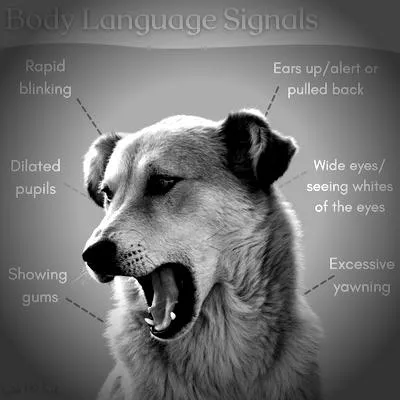
Dogs are constantly communicating with us — we just don’t always know how to listen. While most people recognise obvious signs of stress like growling or cowering, there are dozens of subtler signals that dogs send long before they reach that point.
Learning to read these early signals can prevent behavioural problems, reduce anxiety, and deepen the bond between you and your dog. Here are five of the most commonly missed ones.
1. Lip licking (when there’s no food around)
A quick flick of the tongue over the lips — not the slow, satisfied lick after a meal, but a fast, almost nervous gesture. This is one of the most reliable indicators that a dog is feeling uncomfortable or uncertain. You’ll often see it when a dog is being hugged, stared at, or placed in an unfamiliar situation.
Next time you’re at the vet or introducing your dog to someone new, watch for it. If you see repeated lip licking, your dog is asking for some space.
2. Whale eye (showing the whites)
When a dog turns their head away but keeps their eyes fixed on something, you’ll see a crescent of white around the iris. This is called “whale eye” and it typically means the dog is tense, worried, or guarding something.
It’s commonly seen when dogs are asked to give up a resource (food, toy, resting spot) or when a child approaches them too quickly. If you see whale eye, calmly remove the stressor rather than pushing the interaction.
3. The full-body shake-off (when they’re not wet)
You know that big, dramatic shake your dog does after a bath? When they do it in a dry context — after meeting a new dog, leaving the vet, or after a tense moment at the park — it’s a self-soothing behaviour. They’re literally shaking off stress.
It’s actually a healthy sign that your dog is processing and resetting. But if you see it frequently, it means your dog is encountering stressors regularly and may need some environmental adjustments.
4. Yawning in non-tired contexts
Dogs yawn when they’re sleepy, sure. But they also yawn when they’re stressed, anxious, or conflicted. A dog yawning in the waiting room of the vet isn’t tired — they’re nervous. A dog yawning during a training session might be feeling overwhelmed.
Pay attention to context. If the yawn doesn’t match the situation, it’s probably a stress signal.
5. Displacement behaviours
When a dog suddenly starts sniffing the ground intensely, scratching themselves, or grooming in the middle of an interaction, they may be displacing their anxiety. These are normal behaviours happening at abnormal times — the dog is essentially redirecting nervous energy into a familiar action.
A classic example: your dog is at the park, another dog approaches aggressively, and your dog suddenly becomes very interested in sniffing the grass. They’re not distracted — they’re trying to diffuse the tension.
Why this matters
Most behavioural problems in dogs don’t come out of nowhere. They build gradually as subtle signals go unnoticed and unaddressed. A dog that bites “without warning” almost certainly gave dozens of warnings — lip licks, whale eyes, yawns, freeze responses — that were missed or ignored.
By learning to read these early signals, you can intervene before your dog reaches their threshold. You can remove stressors, create distance, and show your dog that you’re paying attention to what they’re telling you. In our private lessons, we teach you how to recognise and respond to these signals in real time.
That’s the foundation of a trusting relationship — and it starts with learning to listen with your eyes.